| Unit 3 Could you please clean your room?(I) |
一、知识概述
1.学习和掌握本单元出现的生单词、词组和句型。
2.学习和掌握情态动词could的用法。
3.会用英语有礼貌地提出要求和请求准许。
二、单元重难点解析
1.情态动词could的用法
(1)—Could you please take out the rubbish?
请你倒一下垃圾好吗?
—Yes,sure.
好的,当然可以。
(2)—Could you please take the dog for a walk?
请你带狗出去遛遛行吗?
—OK.But I want to watch one show first.
好的,但我想先看个节目。
(3)—Could I go out for dinner with my friends?
我可以和朋友一起出去吃饭吗?
—Sure,that should be OK.
当然,那应该是可以的。
(4)Could we get something to drink after the movie?
看完电影后我们能喝点东西吗?
—No,you can’t. You have a basketball game tomorrow.
不,你们不能。明天你们有一场篮球赛。
以上句子中,均含有情态动词could,下面我们来学习它的用法。在本单元中,情态动词could用于有礼貌地提 出要求或请求准许,用于疑问句,代替can,在时间上与can没有区别,但语气要比can委婉、有礼貌。回答时要用can,不能用could。除此以外, 肯定回答还可以用Sure. /Certainly. /Yes,sure. /No problem. /With pleasure. 等;否定回答还可以用I'm afraid not.等。
e.g.—Could you please lend me your dictionary?
你把你的词典借给我,好吗?
—Yes, sure.
好的,当然可以。
—Could I have your driving license?
我可以看看你的驾照吗?
—Yes, here you are.
好的,给你。
—Could you please water the flowers?
请你给花浇一下水好吗?
—No problem.
没问题。
—Could I use your phone?
我可以用一下你的电话吗?
—No, you can’t. I'm waiting for an important call.
不,不可以。我在等一个重要的电话。
拓展:could的其他用法
① could为can的过去式,表示能力。
e.g.Could the girl read before she went to school?
这个女孩上学前能识字吗?
He said that he couldn’t come.
他说他不能来了。
She could swim at the age of seven.
她七岁时就会游泳。
② 表示惊异、怀疑、不相信等态度,主要用于否定句和疑问句,此时could与can无时间上区别,但语气比can缓和,情绪要弱。
e.g.He couldn’t/can’t be over fifty.
他不可能超过五十岁。
Who could/can have taken it?
谁会把它拿走了呢?
③ 表示可能性,指对将来、现在或过去某种可能的推测。
e.g.My wife is in hospital — our baby could arrive at any time.
我妻子住院了——我们的宝宝随时都可能出生。
The book could be Mike’s. He likes reading science books.
这本书可能是迈克的,他喜欢看科学书籍。
The windows are open. He could have come back.
窗户是开着的。他可能回来过。
④ 用于虚拟语气句。
e.g.How I wish I could go with you!
我多么希望能和你一起去呀!
情态动词could的用法口诀:
表示请求与准许,could委婉有礼貌;
表示能力会不会,could只把过去表;
表示怀疑不相信,could缓和情绪弱;
推测可能用could,虚拟语气也常用。
2.Tony, could you please help out with a few things?
托尼,你可以帮着做几件事吗?
a few意为“几个;少数”。
e.g.He asked us a few questions.
他问了我们几个问题。
A few students are reading books in the classroom.
几个学生在教室里看书。
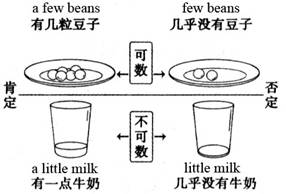
辨析:a few,few,a little与little
(1)a few表示“少数;几个”,修饰可数名词复数,表肯定。
e.g.He left his house a few minutes ago.
他几分钟前离开了家。
(2)few表示“几乎没有的;很少的”,修饰可数名词复数,表否定。
e.g.There are few people in the room.
房间里几乎没有人。
试比较下面两个句子:
I have few friends here. So I often stay at home.
我在这里几乎没有朋友,所以我经常呆在家里。
I have a few friends here. So I often play with them.
我在这里有几个朋友,我经常和他们一起玩。
(3)a little表示“一点;少许”,修饰不可数名词,表肯定。
e.g.Could you give me a little milk.
给我一点牛奶好吗?
(4)little表示“几乎没有的;很少的”,修饰不可数名词,表否定。
e.g.There was little rain all winter.
整个冬天几乎没下雨。
(5)little, a little, few, a few通常会同时出现在选项中,在使用时要注意如下几点:
①看修饰的词是可数名词还是不可数名词,是可数名词时用few或a few;是不可数名词时用little或a little。
②看整句的意思是肯定还是否定,肯定时用a little或a few,否定时用little或few。
③句子中有only这个词时,要用a little或a few。
(6)little可作“小的”讲。
e.g.There’s a little boy here.
这里有一个小男孩。
3.Could I at least finish watching this show?
我至少看完这个节目行吗?
at least意为“至少”,其反义短语为at most,意为“最多”。
e.g.He will stay there for at least three weeks.
他至少会在那儿呆三周。
I am at least taller than him.
我至少比他高。
Although he is poor, at least he is honest.
尽管他穷,但至少他是诚实的。
4.And she won’t be happy if she sees this mess.
如果她看到这样不整洁,她会不高兴的。
mess常用作可数名词单数,意为“杂乱;不整洁”。
e.g.The room was in a terrible mess.
房间里脏乱不堪。
The children made a mess in the living room.
孩子们把起居室弄得很乱。
5.Did they solve the problem?
他们解决问题了吗?
(1)solve作及物动词,意为“解答;解决”。
e.g.Few students can solve the physics problem.
几乎没有学生能解答这道物理题。
We’ll have to think of a way to solve the problem.
我们得想个办法来解决这个问题。
(2)problem作可数名词,意为“问题;难题”。
e.g.—Can you help me with my English after school?
放学后你能帮我补习英语吗?
—No problem. 没问题。
You may tell me what the problem was.
你可以告诉我问题是什么。
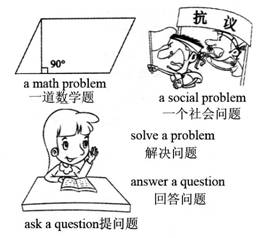
辨析:problem与question
① problem指客观存在的等待解决的“问题”,着重困难。
e.g.The students are working on a math problem.
学生们正在解答一道数学题。
② question指对某事怀疑因而提出等待回答的“问题”,着重疑惑和不能断定。
e.g.The students are asking the teacher some questions.
学生们正在向老师问一些问题。
6.I'm just as tired as you are!
我和你一样累!
as…as…意为“与……一样……”,用于同级比较。第一个as为副词,后接形容词或副词原级;第二个as为连词,引导比较状语从句。as…as…的否定形式为not as/so…as…,意为“不如……”。
e.g.My son is as tall as yours.
我儿子和你儿子一样高。
A kangaroo can run as fast as a bus.
袋鼠可以跑得和汽车一样快。
Lesson 2 is not as difficult as Lesson 1.
第二课没有第一课那么难。
7.For one week,she did not do any housework and neither did I.
一个星期,她没做家务活,我也没有做。
“neither+be动词/助动词/情态动词十主语”表示“……也不”。neither此处用作副词,意为“也不”。
e.g.He doesn’t like swimming and neither do I.
他不喜欢游泳,我也不喜欢。
You can’t speak Japanese and neither can I.
你不会说日语,我也不会。
注意:“so+be动词/助动词/情态动词+主语”表示“……也是”。
拓展:
(1)neither作代词,意为“(两者)都不”。
e.g.Neither of my parents is at home.
我父母亲两个都不在家。
一Would you like the red shirt or the black one?
你想要那件红色衬衫还是黑色的?
一Neither, I’d like the white one.
两件都不要,我要那件白色的。
(2)neither作形容词,与名词单数连用,意为“(两者)都不的”。
e.g.Neither answer is right.
两个答案都不对。
(3)neither…nor…意为“既不……也不……”。
e.g.The room is neither big nor bright.
这个房间既不大也不明亮。
Neither you nor I am right.
你不对,我也不对。
8.“What happened?” she asked in surprise.
“发生了什么事?”她惊讶地问。
(1)in surprise为固定短语,意为”惊讶地;惊奇地”。
e.g.He looked at her in surprise.
他惊奇地看着她。
She looked up in surprise when I shouted.
当我叫喊时,她惊讶地往上看。
(2)surprise此处为不可数名词,意为”惊奇;惊讶”。作可数名词,意为”令人惊奇的事物”。
e.g.To my surprise,there is 50, 000 yuan in the paper bag.
令我惊讶的是,纸袋里有50000元。
I have a surprise for you.
我有一个意外的消息要告诉你。
拓展:surprise也可作及物动词,意为“使惊讶;使惊奇”。
e.g.His Success surprised everyone.
他的成功使大家很惊讶。
The news will surprise her.
这个消息会使她很惊讶。
9.My mom came over as soon as I sat down in front of the TV.
我一在电视机前坐下,我妈妈就过来了。
(1)come over为固定短语,意为“过来,来访,拜访”。
e.g.When did you first come over to China?
你第一次来中国是什么时候?
Do you want to come over on Friday evening?
你星期五晚上想过来吗?
(2)as soon as意为“一……就……”,引导时间状语从句。
e.g.He left as soon as he heard the news.
他一听到这个消息就走了。
As soon as his father went out,the boy turned on the TV.
爸爸刚出门。那男孩就打开了电视。
I’ll write to you as soon as I get there.
我一到那儿,就给你写信。
You’11 telephone me as soon as you see him.
你一见到他,就给我打电话。
注意:在含有as soon as引导的时间状语从句的主从复合句中,主句用一般将来时,从句则用一般现在时表示将来。
(3)in front of意为“在……的前面”。
e.g.A car suddenly stopped in front of me.
汽车突然在我面前停下了。
There is a river in front of my house.
在我家前面有条河。
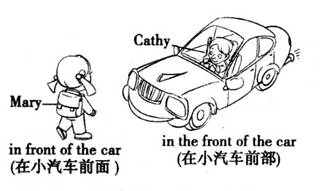
辨析:in front of与in the front of
① in front of表示“在……的前面”,是指在一定范围外。
e.g.Mary is in front of the car.
玛丽在小汽车的前面。
② in the front of表示“在……的前部”,是指在一定范围内。
e.g.Cathy is in the front of the car.
凯西在小汽车的前部。
10.Could you please pass me the salt?
你把盐递给我好吗?
pass此处作及物动词,意为“传递”;pass sb. sth. = pass sth to sb.意为“递给某人某物;把某物递给某人”。
e.g.Jack passes the ball very quickly.
杰克传球很快。
Please pass me a towel.
请递给我一条毛巾。
He passed the news to his wife.
他把这个消息传给了他妻子。
Pass the letter to John.
把这封信交给约翰。
11.Could you lend me some money?
你能借给我一些钱吗?
lend(lent,lent)为及物动词,意为“借给;借出”,常见的短语:lend sb. sth或lend sth. to sb.,意为“借给某人某物”或“把某物借给某人”。其反义词为borrow。
e.g.I lent my bike to Frank yesterday.
昨天我把自行车借给弗兰克了。
Could you lend me some books?
你可以借给我一些书吗?
Could I borrow that book?
我能借那本书吗?
Sam borrowed a car from his friend.
萨姆向他的朋友借来一辆车。
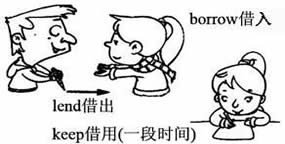
辨析:lend,borrow与keep
(1)lend“借给;借出”,非延续性动词。强调主语把自己的东西借出去
e.g.John lent his book to Mary last week.
上个星期约翰把他的书借给了玛丽。
(2)borrow“借进;借入”,非延续性动词。强调以主语为中心,主语从别人那里把东西借来供自己使用
e.g.Mary borrowed the book from John last week.
玛丽上个星期从约翰那儿借了这本书。
(3)keep“保持;保存”,延续性动词。
e.g.Mary may keep the book for two weeks.
这本书玛丽可以用两个星期。
- 返回 -