字号: 默认 大 中 小
一、知识概述
1.学习和掌握本单元出现的生单词、词组和句型。
2.学习和掌握特殊疑问词引导的宾语从句用法。
3.能听懂有关问路与指路的对话;学会礼貌地询问信息,熟练地表达问路并能正确地为他人指明方向和路线。
二、单元重难点解析
1.
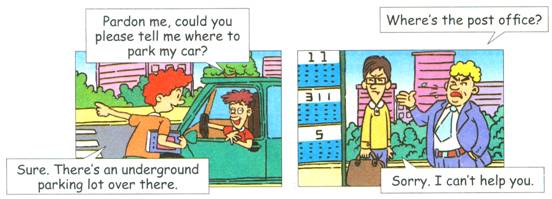
e.g.Where are the restrooms?
→Could you please tell me where the restrooms are?
Where can I get some postcards?
→Excuse me, do you know where I can get some postcards?
Where should we go next?
→I wonder where we should go next.
When does the band start playing this evening?
→Excuse me, could you tell us when the band starts playing this evening?
2.Can you tell me where there’s a good place to eat?
你能告诉我哪里有吃饭的好地方吗?
a good place to eat意为“吃饭的好地方”,其中to eat作定语,修饰前面的名词place。动词不定式作定语通常放在被修饰的名词或代词之后,常见的此类名词还有way,time,chance,opportunity等。
e.g.He has an opportunity to go abroad now.
他现在有一次出国的机会。
拓展:动词不定式作定语时,当被修饰的词是不定式的逻辑宾语时,不定式中的动词必须是及物的;如果不定式中的动词是不及物的,就要带相关的介词,使其构成及物动词短语,此时的介词一定不要省略。
e.g.I need some paper to write on.
我需要一些用来写字的纸。
She can find no one to make friends with.
她找不到一个可以与之交朋友的人。
I’m looking for a room to live in.
我正在寻找一个房间住。
3.When you visit a foreign country, it is important to know how to ask for help politely.
当你去外国旅游时,知道如何礼貌地寻求帮助是重要的。
politely为副词,意为“礼貌地;客气地”。它是由形容词polite(有礼貌的;客气的)加后缀-ly构成的副词。其反义词impolitely意为“无礼地”。
e.g.He speaks to everyone politely.
他对每个人说话都很有礼貌。
polite(adj.有礼貌的)→politely(adv.有礼貌地)
反义词 反义词
impolite(adj.无礼的)→impolitely(adv.无礼地)
4.These are similar requests for directions.
这些是关于方位的类似请求。
(1)request可数名词,意为“要求;请求”,其后常接for + n.,意为“要求/请求……”。
e.g.We should make a request for help.
我们应该请求帮助。
拓展:request用作及物动词,意为“要求;请求”。常见用法有:
① request sth.(from sb.)意为“(向某人)请求某事/某物”。
e.g.He will request your help.
他将请你帮忙。
The man requested some hot water from me.
那个人向我请求要些热水。
② request sb. to do sth.意为“请求某人做某事”。
e.g.She requested me to stop to listen to her.
她请求我停下来听她讲。
③ request +that从句(从句用虚拟语气:should+动词原形,should可以省略)意为“请求……”。
e.g.I requested that she (should) come an hour earlier.
我请求她早一个小时来。
(2)direction意为“方向;方位”,directions意为“指示,(行路的)指引”。
e.g.He drove his car in the direction of Hong Kong.
他把车子往香港的方向开去。
He has a poor sense of direction.
他的方向感很差。
A very helpful woman gave me directions to the police station.
一位非常肯帮忙的妇女告诉我到警察局怎么走。
拓展:有关direction的常见短语有
in the direction of… 朝着……方向
in one’s direction 朝着某人的方向
in all directions=in every direction 向/朝四面八方
in the opposite direction 朝着相反的方向
5.That is because it is a very direct question.
那是因为它是一个很直接的问题。
(1)because it is a very direct question在此作表语,为表语从句。
e.g.He has heart disease. That is because he has been smoking too much.
他有心脏病,那是因为他一直抽烟太多。
This is what I am interested in.
这就是我所感兴趣的。
(2)direct此处用作形容词,意为“直接的;直率的”;其反义词为indirect,意为“间接的”,副词形式为directly,意为“直接地”。
e.g.My house is in direct line with the school.
我家和学校在一条直线上。
拓展:direct还可用作及物动词,意为“指路;指导;导演”。
e.g.Can you direct me to the lift?
你能指给我电梯在哪里吗?
6.The expressions they use might depend on whom they are speaking to or how well they know each other.
他们所使用的表达方式可能取决于他们和谁说话或他们对彼此的熟悉程度。
此句为复合句,they use是省略了关系代词that或which的定语从句,修饰先行词the expressions。whom they are speaking to和how well they know each other是宾语从句,作介词on的宾语。其中whom是who的宾格形式,在口语或非正式文体中常用who来代替,但如果介词提前时则只能用whom。
e.g.Who were you talking to just now?
=To whom were you talking just now?
刚才你在和谁说话?
7.They include expressions such as“Could you please…?”or“May I ask…?”
它们包括像“Could you please…?”或“May I ask…?”之类的表达方式。
(1)include及物动词,意为“包括,包含”。including用作介词时,意为“包括”。
e.g.The price includes both the house and the furniture in it.
这个价格包括房子和里面的家具。
There are seven people in my family, including my grandparents.
我家有7口人,包括我的祖父母。
(2)such as意为“像……这样的,比如”,多用来列举人或物。
e.g.I like drinks such as tea and soda.
我喜欢诸如茶和汽水之类的饮料。
辨析:such as与for example
① such as意为“例如”,用来列举同类人或事物中的几个作为例子。
e.g.China has many big cities, such as Beijing, Shanghai and Shenzhen.
中国有许多大城市,比如北京、上海和深圳。
② for example意为“例如”,一般只以同类事物或人中的一个为例,作插入语,用逗号隔开,可置于句首、句中或句末。
e.g.Noise, for example, is a kind of pollution.
例如,噪音就是一种污染。
8.Sometimes we even need to spend time leading in to a request.
有时,我们甚至需要花些时间来导入一个请求。
(1)spend time/money doing sth.意为“花费时间/金钱做某事”。
e.g.I spent two hours reading the novel.
我花了两个小时读这篇小说。
I spent 100 yuan buying the sweater.
我花了100元买这件毛衣。
辨析:spend,take,cost与pay
四者均用作动词,表“花费”,但其用法却大不相同,具体区别如下:
① spend的主语通常是人,其结构为:
sb. spend time/money (in) doing sth. 某人花费时间/金钱做某事
sb. spend money on sth. 某人在某事/某物上花费金钱
② take常用it作形式主语。其结构为:
It takes sb. some time to do sth. 做某事花费某人多长时间
③ cost的主语是物,其结构为:
sth. cost(s) sb. some money 某物花费某人多少钱
④ pay的主语是人,其结构为:
sb. pay(s) some money for sth. 某人为某物花费多少钱
e.g.I spent one hundred yuan buying the present.
=I spent one hundred yuan on the present.
=The present cost me one hundred yuan.
=I paid one hundred yuan for the present.
这件礼物花了我100元。
It took me 30 minutes to get to school.
我用了半个小时的时间到达学校。
(2)lead in to意为“引入,导入”。其中in为副词,to为介词,其后接宾语。
e.g.We often use “Excuse me” to lead in to a request.
我们经常用“Excuse me”来导入一个请求。
9.I’m looking forward to your reply.
我期待着你的回复。
look forward to意为“盼望;期待”,特指以特别愉快的心情期待着。其中to为介词,而不是动词不定式符号,其后只能接名词、代词或动词-ing形式作宾语,不能用动词原形。
e.g.I'm looking forward to seeing you again.
我期待着再次见到你。
10.You’re always in a rush to get to school on time.
你总是急匆匆地准时到达学校。
on time意为“准时;按时”,相当于at the right time。
e.g.The passengers get on the plane on time.
乘客准时登机。
Please don’t be late. Come here on time.
请别迟到,准时来这里。
拓展:有关time的常见短语还有
①in time意为“及时”。
e.g.The man was just in time for the plane.
那个人正好赶上那次航班。
②at times意为“有时”,相当于sometimes。
e.g.I go to school without breakfast at times.
有时我不吃早饭就去上学。
③by the time意为“到……的时候;到……之前”。
e.g.By the time we got to the cinema, the film had begun.
我们到达电影院时,电影已经开始了。
④at the same time意为“同时”。
e.g.The twins always go to bed at the same time.
这对双胞胎总是同时上床睡觉。