1.reception
(1)接待 n. [U]
a friendly reception 热情的接待
a reception center 接待站
a reception room 接待室
a wedding reception 结婚喜筵
(2)reception class 学前班
(3)receptionist 接待员
2.considerate adj. 考虑周到的;体贴的
主要用法:
(1)be considerate to /towards sb. 对……关心/体贴
We should be considerate to /towards old people.
我们应该对老年人体贴。
(2)It is considerate of sb. to do sth. 某人很体贴地做某事
It is very considerate of you to let me know you are going to be late.
(3)be considerate of sth. 考虑到某事
We should be considerate of the comfort of old people.
我们应该考虑到老年人的舒适。
拓展:
(1)take…into consideration =take…into account 把……考虑进去
We should take the price of the product into consideration.
我们应该把价格考虑进去。
注意:take…into consideration位于句首时,只用现在分词形式,不管句子的主语与take是否具有主动或被动关系。
Taking everything into consideration, the result is better than I expected.
从各方面考虑,结果比预想的要好得多。
(2)All things considered 从各方面考虑,为固定搭配,放在句首时,总用过去分词形式,不管句子的主语与短语的关系。
上例句也可写为:All things considered, the result is better than I expect.
即:Taking everything into consideration = All things considered.
(3)considering 可作为conj. 放在句首,引导一个从句,意思是“考虑到”,不管主句的主语与consider是否具有主动或被动关系。
Considering he’s only just started, he knows quite a lot about it.
鉴于他刚刚开始,他懂的已经不少了。
(4)under consideration 在考虑之中
The plan is under consideration.
这个计划正在考虑之中。
3.astonish vt. 使惊讶;使震惊(to surprise sb very much)
主要用法:
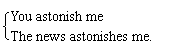
(1)A astonish B A使B感到震惊(A可能是人或物)
You astonished me. 你真使我感到震惊。
The news astonished me. 这个消息使我感到吃惊。
(2)A astonish B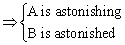
可推出:
The news is /You are astonishing 消息/你令人吃惊。
I am astonished 我感到吃惊。
(3)be astonished at/by 对……感到惊讶
I am astonished at the news. 我对这个消息感到惊讶。
(4)astonished eyes/people/look 惊讶的眼神/人们/神色
相关词语:
注意:shock一般指“令人震惊的坏事”。
amaze一般指“令人惊讶的好事”。
词性变换:
(1)astonishingly adv.令人惊讶的是(常用作插入语)相当于:It is astonishing that…
He is an excellent student. Astonishingly, he hasn’t passed the exam.
他是一个优秀的学生,令人惊讶的是,他没有通过考试。
(2)astonishment n. 惊讶
to one’s astonishment 令某人吃惊的是
in astonishment = in surprise 惊讶地
4.stubborn adj.
(1)固执的;顽固的;倔强的
He is a stubborn boy who won’t obey his mother.
他是一个固执的孩子,他不会听母亲的话的。
Tom is stubborn in accepting new things.
汤姆不容易接受新生事物。(be stubborn in doing sth.)
(2)不灵活的;难以改变的
The lock is rather stubborn; it needs oiling.
这把锁相当难开;它需要加油了。
词性变换:
stubbornly adv. 倔强地,顽固地
stubbornness n. 倔强,顽强
5.enquiry n. 问询;查询(也可作inquiry)
主要用法:
(1)make/hold/set up an enquiry into sth. 进行/提出调查某事
a murder enquiry 一个谋杀案调查
a telephone enquiry 电话查询
(2)at enquiries 问询处
You can ask at enquiries to see if your bag has been handed in.
到问讯处看是否有人交来了你的包。
(3)help the police with their inquiries 协助警察调查
6.convince vt. 使确信;使说服 (make sb completely certain about sth.)
主要用法:
(1)convince sb. of sth. 使某人相信某事。(sb. be convinced ofsth.)
I tried to convince him of what I said.
我尽量使他相信我说的话。
(2)convince sb that-从句(sb. be convinced that-从句)
I tried to convince him that I was right.
我尽量使他信服我是对的。
词性变换:convincing adj. 令人信服的
a convincing speaker /speech 令人信服的演讲者/演讲
7.assume vt. 假定,设想,假装;承担
主要用法:
(1)assume sth.
We can’t assume his guilt.
我们不能假定他有罪。
(2)assume that-从句
We can’t assume that he is guilty.
我们不能假定他有罪。
(3)Assuming that = Supposing/Suppose that… 假定……
Assuming that you are wrong, what will you do?
假定你是错的,你会怎么做呢?
(也可说:Supposing/Suppose that you are wrong, …)
(4)assume your new responsibilities 就任新职
1.Is it coincidence or is it the moonstone’s bad luck that causes the tension and strange things that happen during the rest of the evening?
是巧合还是月亮宝石的厄运导致了那晚上后来的紧张和奇怪的事情呢?
本句运用了“It is…that…”强调句型,本句原句型为:Coincidence or the Moonstone’s band luck causes the tension and strange things that happen during the rest of the evening.
It is/was…that句型中,被强调的部分可以是主语、宾语、状语,也可是从句。但不可以强调谓语。特别要注意对从句、疑问词、短语的强调,例如:
(1)It was because he got up late that he missed the early bus.
因为他起晚了,所以错过了早班车。
原句为:He missed the early bus because he got up late.
(2)It was only in this way that he could solve the problem.
他只有用这种方法才能解决这个问题。
原句为:He could solve the problem only in this way.
(3)It was more the way he said it than what he said that made her displeased.
是他说这件事的方式而不是他说的这件事使她不高兴。
原句为:
More the way he said it than what he said made her displeased.(被强调的是主语。)
Where is it that you live?
这就是你住的地方吗?
How is it that you got the news?
你到底是怎样得到这个消息的?
2.First of all, one of the guests, Godfrey, asks Rachel to marry him, but she declines.
首先是有一个客人叫戈德雷的请求雷切尔嫁给他,但她拒绝了。
decline 指“拒绝”时,多指“婉言谢绝”。
主要搭配:
(1)decline sth. 拒绝某事(相当于 refuse/turn down sth.)
I declined her invitation. 我拒绝了她的邀请。
相当于:I refused her invitation.
I turned down her invitation.
(2)decline sb. (错误)
refuse sb. (错误)
turn sb. down (正确)
He asked me to attend his birthday party, but I 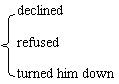 .
.
他邀请参加了他的生日宴会,我拒绝了。
(3)refuse sb. sth. 拒绝给某人提供某物(相当于:refuse to give sb. sth.)
He refused her some money. 他拒绝给她一些钱。