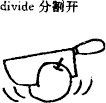
常见短语: divide…into… 把……分成几部分
Let’s divide ourselves into several groups.
我们分成几个小组吧。
The year is divided into four seasons.
一年分为四季。
We shall not let such a small matter divide us.
我们决不会让这么一个小问题分裂我们。
separate指把原来在一起的,相互有联系但并非为一个整体的人或物分或隔开。
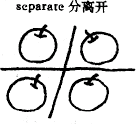
separate the good ones from the bad ones 把好的和坏的分开
Separate those two boys who are fighting, will you?
(你)把那两个打架的孩子拉开,好吗?
4.cut off 切断;突然终止
He cut off the electricity quickly and prevented an accident.
他迅速切断电源,制止了一场事故。
We were cut off in the middle of our conversation.
我们正交谈时,线路被切断了。
The village was cut off (from outside world) by heavy snow for a month.
村庄被大雪封住(而不能与外界联系)达一个月。
5.lead to 通向;导致
Excuse me. Does this road lead to the Dinosaur Park?
请问,这条路通到恐龙园吗?
Too much work and too little rest often leads to illness.
过多的劳累会导致生病。
有时表示“促使某人得出”。如:
Who led you to this conclusion?
谁促使你得出这个结论?
常见的lead短语:
lead sb. by the nose 牵着某人的鼻子走
lead a dog’s life 过狗一般的生活
take the lead 带头;居首位
6.go on exciting rides
go on有“进行(访问、旅行)”的意思。
go on a journey/ a trip to Europe 去欧洲旅行
go on a tour of the city 游览这座城市
go on a visit to the seaside 去海边游玩
go on a picnic in the mountains 到山上野炊
7.go through 通过;经历;仔细检查;用完
I went through the driving test today.
我今天通过了驾驶考试。
She’s gone through a difficult time recently.
她最近经历了一段困难时期。
I’ve gone through all my pockets but I can’t find my keys.
我把所有的口袋都找遍了,就是找不到我的钥匙。
He went through all the money his father gave him.
他把父亲给他的钱都用完了。
8.combine…with… 把……与……结合起来
combine theory with practice 理论与实践相结合
combine hydrogen with oxygen 使氢氧化合
combine business with pleasure(=work and enjoy yourself at the same time) 劳逸结合
You can’t combine studying for your exams with a wild social life!
9.scream one’s way 一路尖叫
英语中有很多v. + one’s way结构,表达十分形象丰富,如:
force one’s way out 挤(出去),冲(出去)
mend one’s ways 改邪归正
fight one’s way 奋斗前进,打开一条道路
push one’s way 挤(出去),冲(出去)
hold one’s way (沿着一条路)一直前进
make one’s way 前进
pick one’s way 小心走路,谨慎前进
10.limit to n. 限于
There is a limit to everything.
凡事都有限度。
We must set a limit to the cost of living.
我们必须限制生活费用。
limit…to… vt. 把……限制在……
You must limit your speech to half an hour.
你必须把演讲限定在半小时之内。
Her breakfast was limited to bread and water.
她的早餐只吃面包和水。
1.Having enjoyed the rides at the Headland, visitors can take the shuttle to the lowland.
在高地公园玩完各种车乘后,游客可以乘缆车前往低地公园。
Having enjoyed the rides at the Headland 是动词-ing形式的完成形式,表示一个已完成的动作,这个动作发生或完成在谓语动词表示的动作之前,相当于状语从句:When they have enjoyed the rides at the Headland。又如:
Having made full preparations, we are ready for the examination.
我们已经作好了充分准备,现在可以应考了。
Having been shown the lab, we were taken to see the school library.
在被带去看了实验室之后,我们又被带去参观校图书馆。
2.It seems like people just can’t get enough of scary rides and exciting adventures.
人们似乎永远也不能满足于那些恐怖的车乘和充满刺激的历险。
It seems/looks like…是“看起来好像……”的意思,后接名词或从句。如:
It seems like rain.
天好像要下雨了。
It seems like we’ll finish on time.
看起来我们似乎能够按时完成。
like在非正式文体中可作为连词,常和feel, look, seem, sound及taste等动词连用,此时的like意思接近于as if。如:
It looks like we are in a rough winter.
看起来我们将有一个难熬的冬天。
It seems like we shall see him no more.
我们可能再也见不到他了。
3.If there isn’t one where you live yet, don’t worry, the theme parks are coming!
如果你的住处还没有,不要着急,主题公园快来了!
where在此引出一个地点状语从句,注意where前面无介词:
Take him where it is quiet.
把他带到安静的地方去。
Where others are weak, he is strong.
别人的弱点正是他的强项。
Put the bottle of medicine where the child cannot reach.
把这瓶药放在小孩子够不到的地方。
Where there are chemical factories, the air is likely to be polluted.
有化工厂的地方,空气就有可能受到污染。
4.OK. Straight down this road, then left, over the bridge, walk past the Free-fall Ride and it will be on my left. Got it. Thank you.
get it(口语)了解,懂得(to understand something, especially after it has been explained to you several times)。如:
Do you get me? 你明白我的意思吧?
Do you get this question? 你明白这个问题吗?
5.A theme park is a collection of rides, exhibitions or other attractions that are based on a common theme.
主题公园就是围绕着某一个主题所设计的集车展、展览及其它游乐项目为一体的公园。
a collection of 集成(a set of similar things that are kept or brought together because they are attractive or interesting).
a large collection of stamps 大量的邮票收藏
base…on… 以……作基础,基于……
One should always base one’s opinions on facts.
意见应以事实为根据。
This news report is based entirely on fact.
这篇新闻报导是完全根据实际情况写成的。
6.Disneyland in California was one of the first theme parks to become popular around the world.
美国加利福尼亚的迪斯尼乐园是世界上广受欢迎的最早的主题公园之一。
在first/ second/ last/ best等后面常用不定式作定语。如:
He was the first Chinese person to win the Oscar.
他是第一个获奥斯卡奖的中国人。
He was the very last to leave the office.
他是最后一个离开办公室的。
7.But them parks also try to make sure that visitors leave knowing more about the idea behind the park.
但是主题公园也努力使游客在出园时对公园背后的理念有更深的了解。
knowing more about the idea behind the park是动词的-ing形式作状语,表示伴随情况或补充说明,常置于句尾,其作用相当于一个并列谓语。如:
Every evening they sat on the sofa watching TV(=and watched TV).
他们每天晚上坐在沙发上看电视。
I translated the whole article from English into Chinese, using an English-Chinese dictionary.
借助于一本英汉词典,我把整篇文章由英语译成了汉语。
They listened attentively, putting something down from time to time(=and put something down).
他们注意地听着,不时地记下些东西。
8.The roller coaster is still a favourite and no theme park would be complete without one.
乘过山车仍然是最受欢迎的娱乐项目,如果没有它,一个主题公园就不能说是完整。
后半句中的谓语动词“would be”是虚拟语气,表达一种与事实相反的情况,介词短语without one(=if there were no roller coaster)表示一种实际可能性不大的假设。
There would be no life on the earth without water(=if there were no water).
没有水,地球上就没有生命。
But for your help(=If you had not helped me), I couldn’t have succeeded.
没有你的帮助,我不可能取得成功。
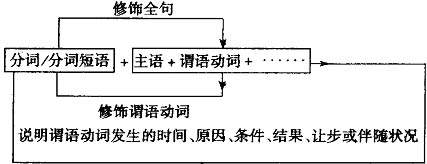
根据现在分词所表示的动作与谓语动作发生的先后,我们应选择现在分词的不同形式在句中作状语。若现在分词所表示的动作与谓语动作同时存在,或同时发生,则用现在分词的一般式;若现在分词所表示的动作发生在谓语动作之前则用现在分词的完成式,即having done的形式。
(一)现在分词短语作时间状语有以下三种情况:
1.分词动作一发生,谓语动作紧跟着发生,这时用现在分词的一般式作时间状语,其逻辑主语为句中的主语。常用的动词,如:hear, see, arrive, return, get to, look, open, close, leave, turn around, walk等,表示一个极短暂动作。此种情况可以换作on+动名词,表示相同的意思。译作“一(刚)……就……”。此种情况也可以换作是when引导的时间状语从句,该从句的动词多用一般过去时表示。如:
Hearing their teacher's voice, the pupils stopped talking at once.
= On hearing their teacher's voice…
= When they heard their teacher's voice, the pupils…
一听到教师的声音,学生们立即停止讲话。
2.谓语动作发生在分词所表示的动作过程之中,则用when /while+现在分词的一般式,分词的逻辑主语为句中的主语。此种情况可以用in+动名词的一般式代替。也可以换作when、while引导的时间状语从句,该从句的谓语动词用进行时态。如:
Don't be careless when /while having an exam.
= Don't be careless in having an exam.
= Don't be careless when / while you are having an exam.
考试时不要粗心。
注:此结构中,不能用其他连接词替换when或while。
3.分词所表示的动作完成之后,谓语动作才发生,则要现在分词的完成式,即having done的形式。分词的逻辑主语应是句中的主语。这种情况可以用after+动名词的一般式表示。
这种情况也可以用after /when引导的时间状语从句来替换,该从句的谓语动词用过去完成式。如:
Having finished his homework, the boy was allowed to watch TV play.
=After having finished his homework, the boy…
=After /when he had finished his homework, the boy…
做完作业以后,男孩才允许看电视剧。
(二)现在分词在句中作原因状语
1.分词短语在句中作原因状语时,相当于一个原因状语从句。与时间状语一样,也要注意分词所表示的动作与谓语动作的先后关系。当分词所表示的动作与谓语动作同时发生或几乎同时发生时,用分词的一般形式。此时分词的逻辑主语须是句中的主语。这样的原因状语可以换成because, as引导的原因状语,该从句谓语动词用一般过去时。
Not knowing how to work out the difficult physics problem, he asked the teacher for help.
= Because he didn't know how to work out the difficult physics problem, he asked…help.
因为不知道如何解这道物理难题,他求助老师。
2.当分词表示的动作发生在谓语动作之前,可以用现在分词的完成式在句中作原因状语,其逻辑主语须为句中的主语,该短语的作用相当于一个原因状语从句。该从句的谓语动词须用完成时。如:
Having lived with the girl for 5 years, we all know her very well.
= Because we have lived with the girl for 5 years, we all know her very well.
因为与那个女孩一起生活了五年,我们都非常了解她。
(三)现在分词短语在句中可以作条件状语,其逻辑主语须为句中的主语,该短语相当于一个条件状语从句。
Working hard, you'll succeed.
= If you work hard, you'll succeed.
如果你努力工作,你会成功的。
Turning to the left, you will find the path leading to the park.
= If you turn to the left, you will find the path leading to the park.
如果转向左边,你将找到通向公园的小道。
(四)分词短语在句中作让步状语
分词短语在句中作让步状语时,相当于一个让步状语从句,有时分词前可以带有连接词although, whether, even if, even though。现在分词短语作让步状语,分词的逻辑主语是句中的主语,变成状语从句时,需用主动语态。
Weighing almost one hundred jin the stone was moved by him alone.
= Although the stone weighted almost one hundred jin, it was moved by him alone.
虽然那块石头重将近一百斤,他一个人就把它挪动了。
(五)分词短语在句中作结果状语
现在分词短语在句中可以作结果状语,它的逻辑主语便是句中的主语,该短语相当于一个结果状语从句,且用主动语态。分词短语在句中作结果状语时,通常位于句末,中间有逗号。有时为了加强语气,就在分词前加thus。
Their car was caught in a traffic jam, thus causing the delay.
= Their car was caught in a traffic jam, thus it caused the delay.
他们的车遇上交通阻塞,因而耽误了。
(六)分词短语在句中表示方式或伴随情况
分词短语表示方式或伴随情况是比较常见的。它用来说明动作发生的背景或情况。一般情况下,现在分词所表示的动作与谓语所表示的动作同时发生,它的逻辑主语就是句中的主语,谓语动词作为主要动作,而现在分词表示一个陪衬动作,它没有相应的状语从句可以转换,但可以用并列句来转换。如是过去分词,则过去分词可以说明谓语动作的背景。过去分词与其逻辑主语之间有动宾关系。如:
The children ran out of the room, laughing and talking merrily.
相当于The children laughed and talked merrily, and they ran out of the room.
那些孩子们跑出房间,愉快地笑着、说着。
Helped by their teacher, the students finished the task successfully.
在老师的帮助下,学生们成功地完成了任务。