1.In many ways, he is one of them…
从很多方面来讲,他是他们(农民)中的一员……
in a way(in one way; in some ways): to a certain extent but not entirely 在某种程度上
In some ways, the job is difficult.
就某些方面而言,那项工作很困难。
way还可以表示“方法,手段”,例如本课有一句:
Dr Yuan searched for a way to increase rice harvests without expanding the area of fields.
袁博士寻求一种不增加种植面积而增加产量的方法。
在祈使句中,表示“方法,手段”的way不与in连用,请比较:
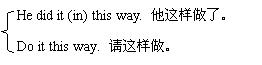
表示“方法,手段”的way后可以接of + v.-ing,也可以接to + v.,例如:
The best way of learning English is to go to a country where the language is spoken.
学英语的最好方法是到讲英语的国家去。
There are a lot of ways to make friends.
交朋友的方法很多。
2.This special strain of rice makes it possible to produce one-third more of the crop in the same fields.
这种特殊的稻种使得同样的田地多收获三分之一的产量。
make it…to do意为“使(做某事)成为……”。如:
The fine weather makes it possible for us to go for an outing next week.
好天气使我们的下周出游成为可能。
Wherever he is, he makes it a rule to run for an hour every day.
他无论在哪里,都把每天跑步一小时当作规定去执行。
3.Thanks to his research, the UN is trying to rid the world of hunger.
由于他的研究,联合国正在使世界摆脱饥饿。
thanks to sb. /sth: because fo sb. /sth.表示“多亏,由于”,具有介词性质。
I was late thanks to the traffic.
由于交通堵塞我迟到了。
It was thanks to his advice that I succeeded.
多亏了他的忠告我才得以成功。
4.Using his hybrid rice farmers are producing harvests twice as large as before.
用他的杂交水稻种子,农民们种出比以前多一倍的粮食。
形容词原级as…as的前面可以用倍数词(如half, a quarter, twice, three times等),意为“是……多少倍”。
We got three times as many people as we had expected.
来的人数是我们预料的三倍。
The bedroom is twice as big as the kitchen.
卧室是厨房的两倍大。
You are not half as clever as you think you are!
你没有你自己想象的一半聪明!
5.You might guess that Dr. Yuan, who is now rich and famous, is satisfied with his life.
你可能会以为袁博士(现在)富俗了,而且出了名,他对生活就满足了。
be satisfied: be contented 感到满意的,满足的
I was not satisfied with the result.
我对那个结果感到不满意。
He was satisfied when he won the race.
他对赢得赛跑感到满意。
be satisfied后面还可以接“of+名词”或that从句。例如:
I am satisfied of his innocence.
=I am satisfied that he is innocent.
我确信他是清白无辜的。
6.And he would rather keep time for his hobbies.
他宁愿把时间花在自己业余爱好上。
would rather: prefer to 宁愿;宁可;较喜欢
I would rather stay at home than go out.
我宁可呆在家里,不想出去。
7.He used to walk to his rice fields twice a day, but now he prefers to ride his motorcycle.
他过去一天两次走着去稻田,现在他更喜欢骑摩托车去。
(1)used to意为“过去常常(现在已不是如此了)”。如:
He used to grow all kinds of flowers in his garden but not now because he is getting older.
他过去喜欢在花园里种各种花卉,现在不了,因为他上年纪了。
There used to be a lot of trees there. 那里过去有好多树。
be/get used to doing与used to形式上有些相似,但意思却很不一样,be/get used to doing意为“习惯于”。如:
I am not used to talking to him. He is too serious.
我不习惯与他谈话,他太严肃。
You should get yourself used to working carefully.
你要使自己习惯于细心的工作。
(2)prefer to do(rather than do)意为“(相比之下)更喜欢做某事”。如:
He prefers to walk home rather than take a bus.
他不愿乘公共汽车,更愿意走回家。
He prefers to stay alone rather than gossip with his co-workers in his spare time.
空闲时间他不愿与同事闲聊,更愿意一人独处。
8.Dr Yuan awoke from his dream with the hope of producing a kind of rice that could feed more people.
袁博士带着能种植一种可以养活更多人的水稻的希望从梦中醒来。
with the hope of意为“带着某种希望”。如:
He went to see the hope of getting a rise in his salary.
他去见老板,希望能提高他的工资。
He decided to talk to his teacher with the hope of persuading her to give him a higher grade.
他决定去和老师谈谈,希望说服她给自己提高分数。
9.It also refers to crops growing with natural rather than chemical fertilizers.
它也指用自然肥料而不是化肥种植庄稼。
refer to
(1)to be relevant to sb. /sth.; concern sb./sth.与……有关;关系到某人/某事
What do these numbers refer to?
这些数字表示什么意思?
(2)to mention or speak of sb. /sth.提到、说到或涉及到某人或某事
In his speech, he didn’t refer to the problem at all.
在他的演说中丝毫未触及那个问题。
(3)to turn to sb. /sth. for information 向某事物或某人查询信息,即表示“参考、参阅”。
If you have some questions, please refer to the guidebook.
如果你有问题,请参阅旅游指南。
10.Instead, organic farmers insist on changing crops every two or three years, for example, corn or wheat followed by peas or soybeans.
而有机耕作的农民们坚持每隔两到三年换种农作物。例如,种玉米或小麦后再改种豌豆或大豆。
insist on…意为“坚持要求……”。如:
Everybody was made unhappy because he insisted on stopping the work.
因为他坚持停工,弄得大家都不愉快。
He insisted on the whole family moving to Shanghai.
他坚持全家搬到上海去。
insist后面还可以跟从句,其中谓语动词通常用should+动词原形构成。如:
Huck insisted that he (should) be present at the meeting.
哈克坚持要参加会议。
She insisted that she (should) be sent to work in the USA.
她坚持要求被派到美国去工作。
类似的词语还有suggest。
I suggest that she (should) read aloud.
我建议她大声读书。
11.But whatever they grow they make sure that what is left in the ground after harvesting becomes a natural fertilizer for the next year’s crop.
但是无论他们种什么,他们确保在收割后留在地里的东西成为来年农作物的天然肥料。
whatever引导让步状语从句,表示“无论怎样”,相当于no matter what。
Whatever reasons you may have, you should carry out a promise.
无论你有什么理由,你都应当遵守诺言。
Remember: whatever happens, don’t get nervous.
记住:无论发生什么都不要紧张。
Whatever you do, don’t give up.
无论你做什么,都不要放弃。
Whatever the weather is, we will go water skiing.
不论天气如何,我们都要去滑冰。
(一)v.-ing形式作主语和宾语
1.作主语
In many countries, shaking one’s head means “no” and nodding means “yes”.
Beating a child will do more harm than good.
It is no use trying to persuade him. He won’t listen to you at all.
2.作宾语
We can learn a lot about what a person is thinking by watching his or her body language.
Do you mind my smoking here?
Have you finished using the telephone?
Have you considered getting a job abroad?
(二)v.-ing形式与不定式作主语的区别
1.不定式作主语一般表示某个特定的、比较具体的动作;而v.-ing形式作主语则表示抽象的、泛指的动作。如:
It is bad manners to stare at a foreign guest.
Learning a foreign language is very useful to me.
2.动词不定式的逻辑主语可以由for短语表示。如果逻辑主语与前面的形容词有主表关系,则由of短语表示。而v.-ing形式的逻辑主语可用名词或代词的普通格或所有格来表示。如:
It’s not an easy job for man to make use of atomic energy.
It is very kind of you to do me a favor.
Wang Ming’s becoming a college student greatly encouraged me.
注意:置于句首时多用所有格形式。
3.在疑问句中,一般用v.-ing形式的复合结构作主语,而不用不定式的复合结构作主语。如:
Does our saying that mean anything to him?
而不可以说:Does for us to say that mean anything to him?
4.在句型It is +表示否定的形容词(-less)或名词(no good, no use)后,一般多用v.-ing形式作主语。如:
It’s useless studying English without practice.
It’s no use talking about it.
(三)后面常接v.-ing形式作宾语的动词或短语
1.v.–ing形式作宾语只能跟在某些动词之后。这些动词常见的有:
admit(承认) advise(建议) allow(允许)
appreciate(感激) avoid(避免) consider(考虑)
deny(否认) dislike(不喜欢) enjoy(喜欢)
miss(错过) escape(逃脱) excuse(原谅)
feel like(想要) finish(结束) give up(放弃)
imagine(想象) involve(包含) keep(保持)
mind(介意) risk(冒……危险) permit(允许)
suggest(建议)
2.某些短语后也常跟动词-ing形式作宾语。如:
习惯于 be/get used to 喜欢 prefer to
坚持 stick to 谈到 come to
反对 object to 期待 look forward to
导致 lead to 加上 add to
献身于 devote to 开始 get to
被宣判 be sentenced to
怎么记忆这些动词和短语呢?
习惯于旧方式的人坚持反对新事物,这样导致许多献身于科学的人被宣判为大逆不道.不喜欢这种事实的人谈到此事时,总期待着加上自己的努力使它开始改变。